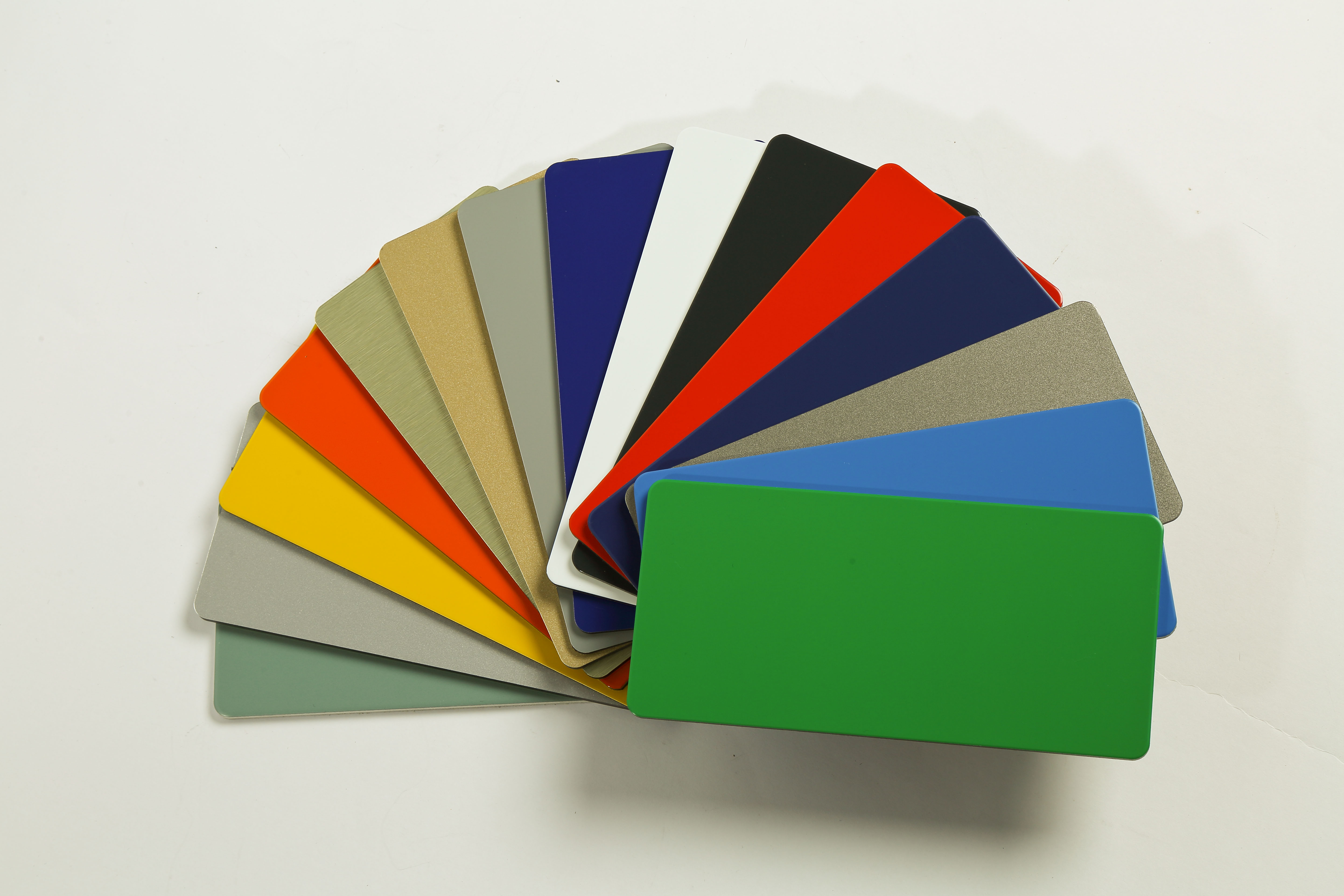
An ACP coating should be specified by exposure, appearance and documented performance. Resin names are useful starting points, but they do not establish a universal service life, fixed warranty or exact price difference.
PVDF stands for polyvinylidene fluoride. Architectural PVDF coatings are used where exterior weathering performance matters. Arkema's Kynar 500 specification requires a minimum proportion of its PVDF resin in the coating binder; the brand name refers to a licensed coating system rather than every paint described as fluorocarbon.
Ask the panel supplier to identify the proposed formulation, coating supplier, layer structure and finish specification. Do not assume the ALUCOVERBOND quotation includes a particular resin brand unless it is confirmed in writing.
FEVE means fluoroethylene vinyl ether. AGC describes FEVE resins that can be formulated into coatings with a range of gloss and colors. The resin family offers formulation flexibility; the finished coating still needs to be evaluated as a complete system.
FEVE is not automatically superior to every PVDF formulation in every environment. Compare product-specific test data, substrate preparation and written warranty conditions instead of assuming an extra number of years from the resin name.
In an ACP coating discussion, PE generally refers to polyester; it should not be confused with the polyethylene core inside a panel. Confirm whether the quotation is for standard polyester or a named enhanced-durability grade.
Trade labels such as HDP or HDPE are not sufficiently precise on their own. Ask for the resin description and coating datasheet. A matte surface, a color sample or the label “high-density” does not establish a specific durability class.
Request the actual written warranty before ordering. A coating should not be advertised as incapable of peeling or fading, and a fixed price premium should not be assumed without comparing current quotations.
Use a physical sample and an agreed reference for color approval. For an extension to an existing facade, assess the existing surface and the proposed new batch together; an old batch record cannot guarantee an exact match to a weathered building.
Send ALUCOVERBOND the location, application and preferred finish to discuss the quoted options. Read our thickness checklist and fire-rating guide before finalizing the complete panel specification.