“Fire-rated ACP” is not a complete specification. A buyer needs the classification system, the full result, the product tested and the permitted installation conditions. A2, B1 and Class A should not be treated as interchangeable labels.
In European reaction-to-fire terminology, A2 is a main class within EN 13501-1. A complete result may also include smoke and flaming-droplet suffixes, such as A2-s1,d0. Read the full classification report rather than shortening the result to “A2.”
B1 is terminology used under China's GB 8624 classification framework. It is not the name of a European Euroclass. A GB report cannot simply be relabeled as an EN report because both products are described as flame-retardant.
As of October 2026, China's official standards platform lists GB 8624-2012 as current and GB 8624-2025 as scheduled to take effect on January 1, 2027. Check the applicable edition and transition requirements for the delivery market.
A classification describes performance under specified test conditions. It does not establish that a panel produces no toxic gases, that every component is non-combustible, or that a complete facade will perform safely in every fire. Smoke and droplet classifications should be interpreted within the test system that produced them.
ASTM E84 evaluates surface burning characteristics under controlled conditions. Its result is not a substitute for every factor needed to assess fire risk in the installed assembly. Do not assume an E84 result automatically provides an EN classification or facade-system approval.
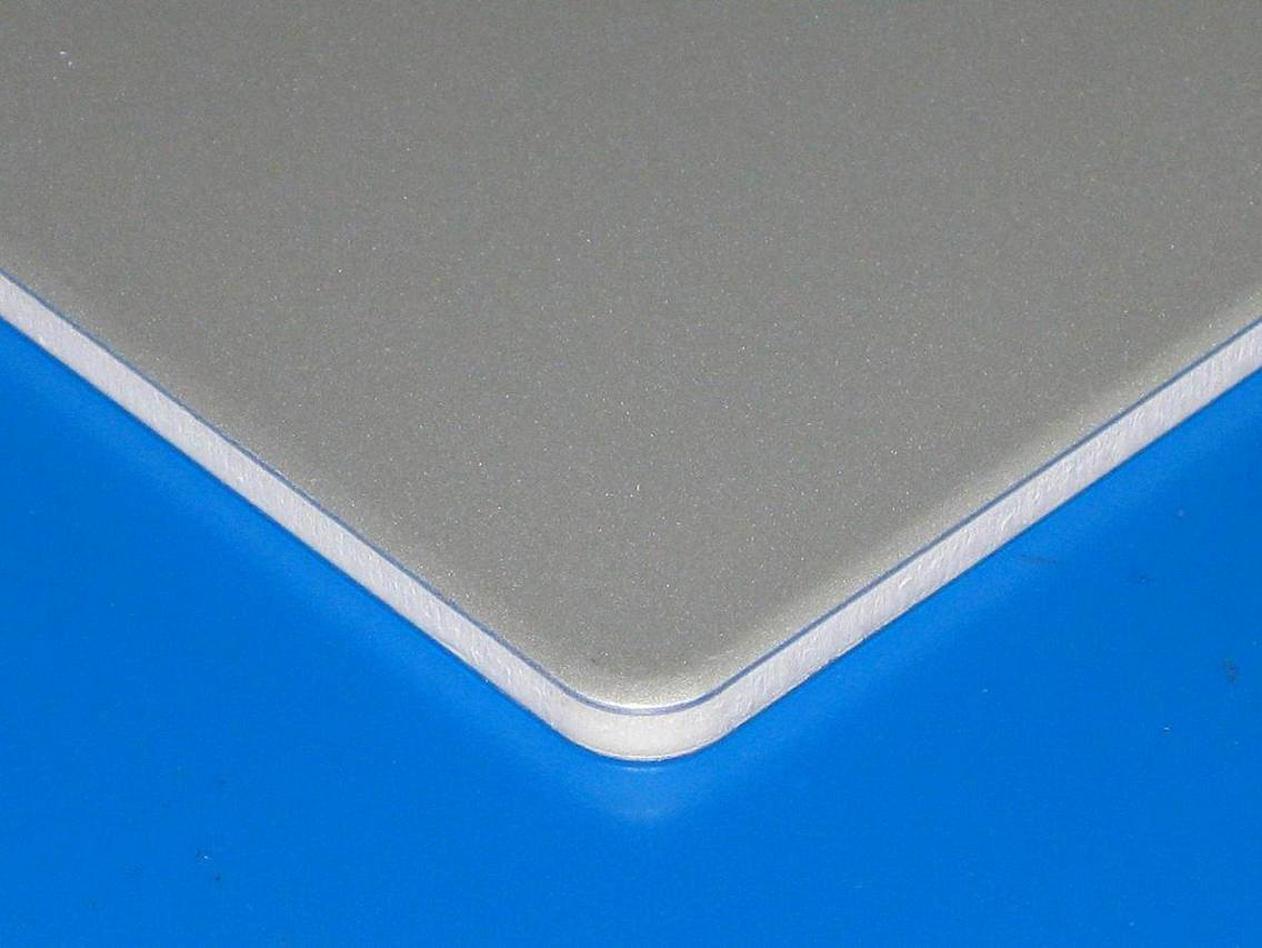
Core formulation is one part of the evidence. Panel thickness, skins, joints, fixings, insulation, cavities and barriers also belong in the specification and assessment. A sample's core color is not proof of a fire class.
Ask the project designer to identify the required evidence for the actual building and market. Avoid generic rules such as “all buildings above a particular height need the same panel” or “ordinary PE is acceptable for every low-rise application.”
Do not accept a certificate for a different product merely because it carries a familiar class name. Ask for clarification before approving a substitution.
Send ALUCOVERBOND the project location, application, required classification and installation drawings. Request current documentation for the exact specification being quoted. For related purchasing decisions, see our ACP thickness guide and installation-system guide.